Chiller Sizing: Central vs Package Comparison
Central chillers suit large continuous loads, while package units handle modular buildings. Equipment sizing depends on load profile, serviceability, and site constraints. Use load data, not rule of thumb, to select the right system.
- Central chillers handle steady, large loads with separate cooling distribution.
- Package units combine condensing and evaporating sections in one footprint.
- Equipment sizing must match the actual calculated cooling load, not guesswork.
- Service access, refrigerant type, and maintenance staffing drive selection.
- Compare capital cost against operating cost over the full service life.
How to frame the sizing comparison
Chiller sizing starts with a confirmed cooling load. Do not pick a central or package system before the load calculation is complete. A central plant and a package unit respond to different site conditions, different maintenance models, and different cost drivers.
The comparison below assumes the cooling load is known in tons or kilowatts of cooling. From that point, the decision turns on how the equipment will be installed, who will service it, and what the building actually needs day to day.
Where central chillers fit best
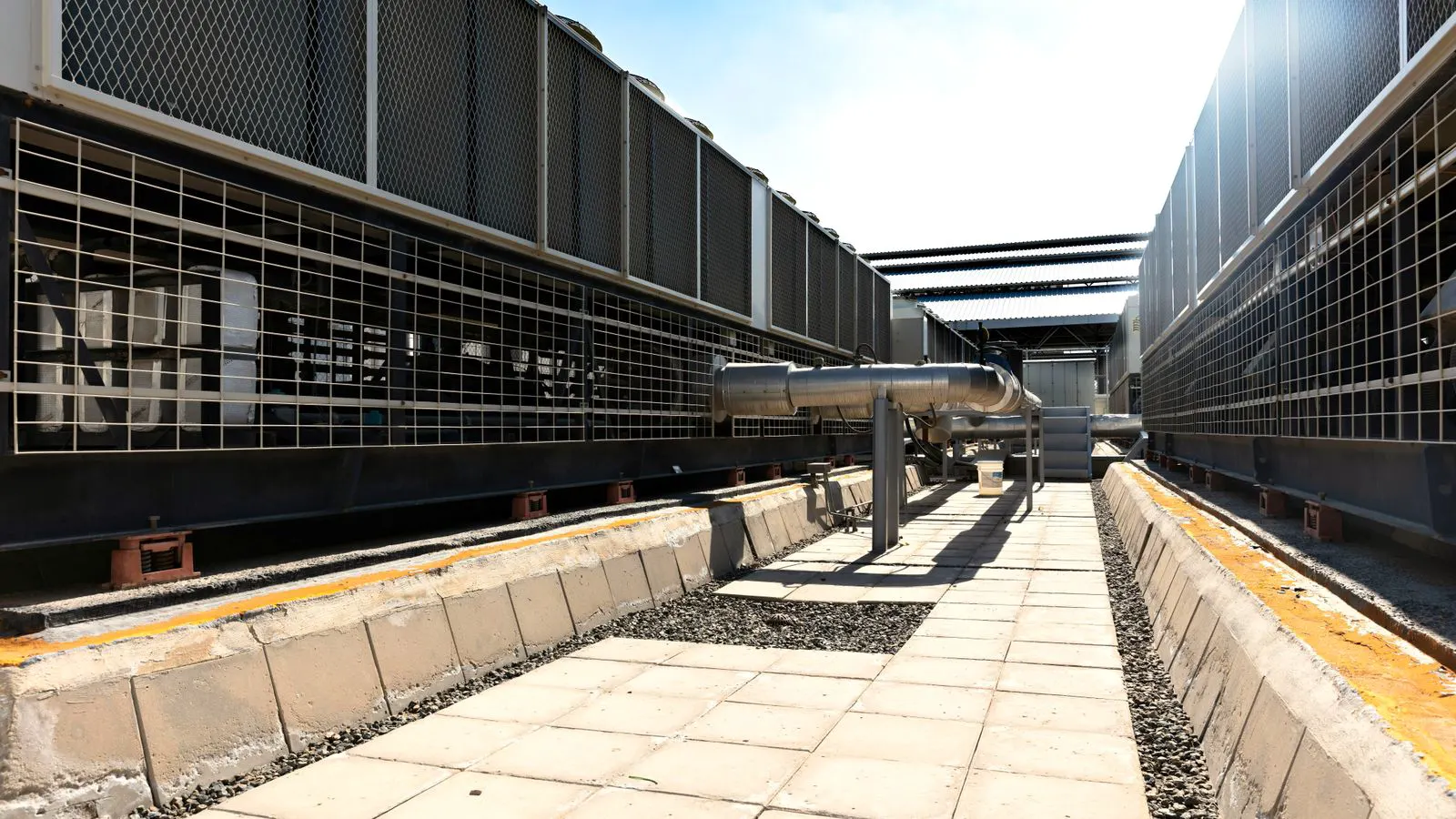
Central chillers sit in a dedicated mechanical room. They connect to a chilled water loop that carries cooling to air handlers, fan coil units, or direct expansion terminals throughout the building.
This model works when the building has a steady, predictable load. A hospital, a data center, a large office tower, or a manufacturing plant often runs cooling for a long portion of the day. The central plant can be sized to match the peak load and then modulated down during lighter periods.
Central systems also benefit from separation. The condenser can sit outdoors while the evaporator and refrigerant circuit stay indoors. This keeps the noisy compressor work away from occupied spaces and makes it easier to isolate the refrigerant side for maintenance.
The trade-off is that a central plant needs space. You need room for the chiller, the pumps, the heat exchangers, and the controls. You also need a chilled water loop, which adds piping, insulation, and balancing work.
Where package units fit best
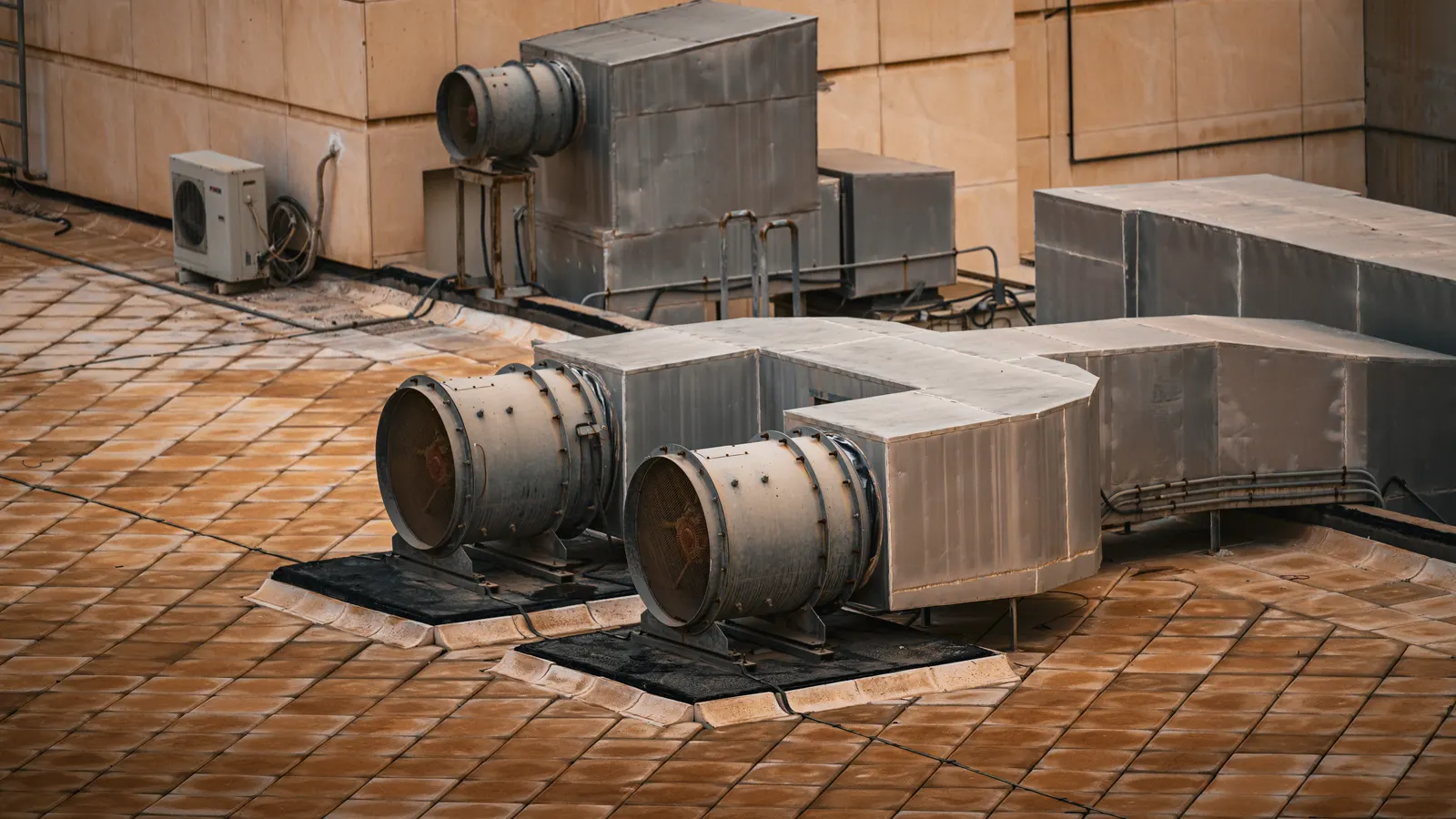
Package units combine the compressor, condenser, and evaporating section into one or a few self-contained cabinets. They often sit on a rooftop or along an exterior wall. The cooling is delivered through internal fans or through ductwork that serves only that section of the building.
This approach fits buildings with smaller, segmented loads. A small office building, a strip mall, a school wing, or a retrofit where mechanical room space is tight often works better with packages.
Package units reduce piping length. You avoid long chilled water runs, pump rooms, and balancing valves. That cuts installation complexity. It also makes it easier to add capacity later by adding another cabinet.
The trade-off is that packages are less efficient at the system level when the building load changes a lot. A single large package running at part load may not modulate as well as a central plant with variable frequency drives and a properly sized loop.
Sizing approach for central plants
Sizing a central chiller is a multi-part calculation. The first step is the cooling load. Use the building load calculation to determine the peak sensible and latent loads. The second step is the plant configuration. You may choose one large chiller, two equal units for redundancy, or a larger unit plus a smaller trim unit.
The third step is the chilled water loop. The loop must carry the designed flow at the right temperature rise. Pipe sizing, pump selection, and heat recovery all affect the final system efficiency.
A common mistake is sizing the chiller for the design peak and then ignoring the part load curve. If the building runs at 30 percent of peak for most of the day, a large single chiller may sit in an inefficient range. A two-unit plant with load sharing or a trim chiller can perform better.
Central chiller sizing also requires attention to refrigerant charge, condenser water temperature, and ambient range. A unit sized for a hot climate may be oversized for a mild one. A unit sized for a mild one may struggle in a hot, humid region.
Sizing approach for package units
Package unit sizing is simpler on paper. You take the zone load and pick a unit that covers it with the right capacity range. The manufacturer catalog will list available tonnage. You choose the closest match that meets the peak requirement.
The harder part is the airflow side. A package unit is only as good as its air distribution. If the ductwork is undersized, the unit will short cycle or trip on a high pressure switch. If the ductwork is oversized, airflow may drop too low and the unit may not dehumidify properly.
For package units, check the static pressure. The internal fan must overcome the duct run, filters, and terminal units. A unit that looks right on the nameplate may perform poorly if the duct system cannot deliver the required airflow.
Package units also have a different failure mode. When a refrigerant leak or a compressor fault occurs, the entire zone can lose cooling. In a central system, a fault in one terminal does not stop the plant from serving other areas.
Side-by-side comparison
| Option | Best for | Limitations |
| Central chiller plant | Large buildings with steady loads and dedicated mechanical space | Higher upfront cost, longer chilled water loop, more complex commissioning |
| Single package unit | Small buildings or single zones with limited ductwork space | Less efficient at part load, whole zone affected by failure |
| Multiple package units | Buildings with separated zones or phased construction | More rooftop space, more units to service, higher maintenance count |
| Central plant with trim chiller | Variable loads with long part load periods | More equipment to buy and maintain, controls complexity |
| Package with heat recovery | Buildings with internal heat sources or space heating needs | Additional heat recovery piping and controls |
When to pick central versus package
Pick a central chiller when the building has a large, consistent cooling load and the site can support a mechanical room. If the load stays high for many hours, a central plant with variable speed drives and a well-sized chilled water loop will usually deliver better part load efficiency.
Pick a package unit when the building is small, the load is segmented, or the site cannot support a central plant. Package units are easier to install, easier to phase, and easier to service for a small team. They are also a good fit for retrofits where adding a chilled water loop is not practical.
A hybrid approach is common. A large central plant handles the main load, and package units cover a wing added later or a zone with different operating hours. This gives the building flexibility without forcing the entire system into one configuration.
Practical checks before finalizing equipment sizing
Before you sign off on the equipment, run through these checks.
- Confirm the cooling load with a full load calculation. Do not rely on a rough tonnage per square foot estimate.
- Check the part load profile. How many hours per day does the building run at full load, and how many at low load?
- Review the site constraints. Is there room for a mechanical room? Is there rooftop space for packages?
- Look at the chilled water or refrigerant distribution. Long pipes and complex controls raise the cost and the risk of poor performance.
- Compare maintenance access. Can a service crew reach the central plant without moving furniture? Can they climb to a rooftop package without a lift?
- Check the controls requirement. A central plant with good controls can outperform a larger unit with poor controls.
- Review the refrigerant side. The type of refrigerant, the charge amount, and the leak path all affect service time and safety.
These checks turn sizing from a catalog selection into a system decision. The equipment on the nameplate matters, but the system around it matters more.
Common mistakes to avoid
The most common sizing mistake is picking the largest unit that fits the load. A larger unit costs more, uses more space, and often performs worse at part load. It also makes the controls harder to tune.
Another mistake is ignoring the condenser side. A chiller is only as efficient as its condenser. If the condenser water temperature is high, the compressor works harder and the COP drops. Package units face the same issue with the outdoor air or cooling tower.
A third mistake is undersizing the distribution. A well-sized chiller can be wasted if the chilled water loop cannot carry the flow. Pipe friction, poor pump selection, and unbalanced valves all eat into capacity.
For package units, the mistake is usually on the air side. A unit that is correctly sized for the cooling load can still fail if the ductwork cannot deliver the required airflow. Check the static pressure and the terminal units before the unit is installed.
Finally, avoid assuming that one size fits all zones. Different areas of a building have different loads. A central plant can handle that with a loop and zoning. A package system handles it by splitting the building into smaller units. Both work. The key is to match the equipment to the actual load and the actual site.
Final decision points
The choice between central and package is not about which technology is better. It is about which system fits the building. A central chiller is a plant. It needs space, controls, and a distribution loop. A package unit is a self-contained machine. It needs airflow and access.
Equipment sizing is a system decision. The load calculation sets the capacity. The site, the maintenance model, and the part load profile set the configuration. Get those four things right and the selection becomes straightforward.
Frequently asked questions
What is the main difference in sizing between central chillers and package units?
Central chillers are sized to a building load and a chilled water loop. Package units are sized to a zone load and the local air distribution system.
Can a building use both central and package equipment?
Yes. A central plant can handle the main load while package units serve added wings or zones with different operating hours.
What drives the choice more, equipment cost or operating cost?
Both matter. A central plant may cost more upfront but can run more efficiently at part load. A package system may cost less and be easier to maintain.
How do I know if a package unit is too large for the zone?
Check the part load curve and the airflow requirement. If the unit runs at low capacity for most of the day and the ductwork cannot match the airflow, it will perform poorly.
Is a central chiller always better for large buildings?
Not always. The site, the maintenance staffing, and the load profile matter. A large building with segmented loads or limited mechanical space may still work better with packages.